BYK Logo
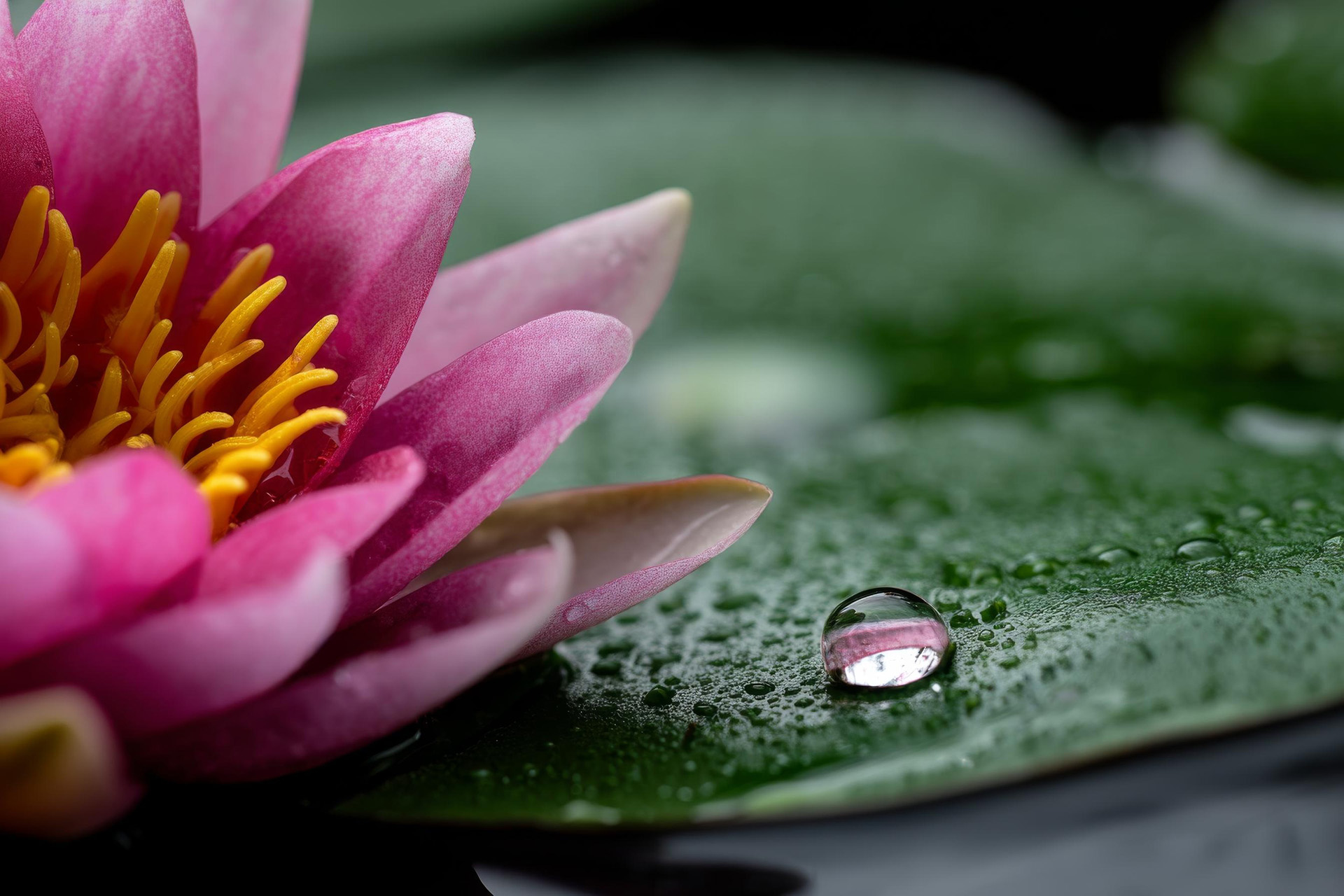
Lotus Flower

Success Story

Water-repellent textile finishing without PFAS and silicones

Our innovative AQUACER 492 wax additive

The legacy and potential of waxes

Waxes have been known and utilized by humankind for centuries due to their remarkable properties. As early as ancient Egypt, waxes were used in the mummification process to slow down biological decay, taking advantage of their hydrophobic and preservative characteristics. Over time, waxes found their place in numerous applications, from wood and leather treatment to food preservation and cosmetics.

Today, in the face of mounting environmental concerns and the urgent need for sustainable materials, waxes offer exciting potential as effective alternatives to synthetic and potentially harmful substances. Based on inspiration from biological systems, we have developed an innovative wax-based additive for water-proofing textiles that mimics nature’s own protective mechanisms while offering high performance and ecological safety.

Nature as a role model: Bio-inspired functional surfaces

In the natural world, waxes play a central role in protecting living organisms. Many plants produce thin wax-based coatings—known as cuticular waxes—on their leaves and stems to protect against:

  • Moisture or water loss
  • Microbial attack
  • UV radiation
  • Oxidative degradation

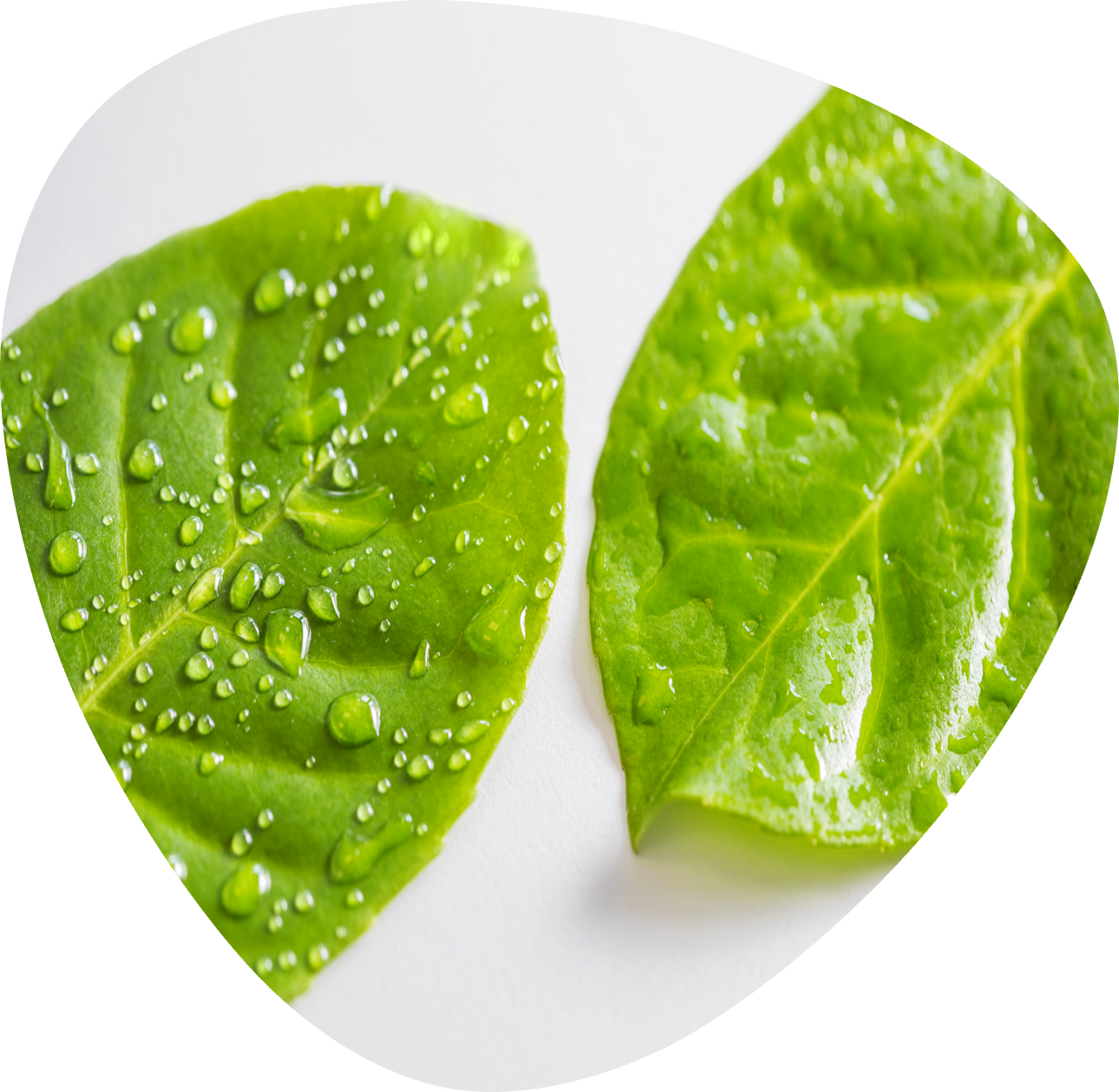
For example, the lotus leaf and other superhydrophobic surfaces exhibit self-cleaning and water-repelling properties due to a combination of surface microstructure and wax chemistry. Similarly, bird feathers and fruit skins rely on natural waxes for moisture control and environmental resistance.

Leaves

Our development is based on these biomimetic principles. We sought to emulate the functionality of plant waxes in a form that could be reliably transferred to textiles—achieving effective water repellency without sealing the fabric or compromising breathability, hand feel, or flexibility.

The innovation: AQUACER 492 - A water-based emulsion of modified paraffin wax

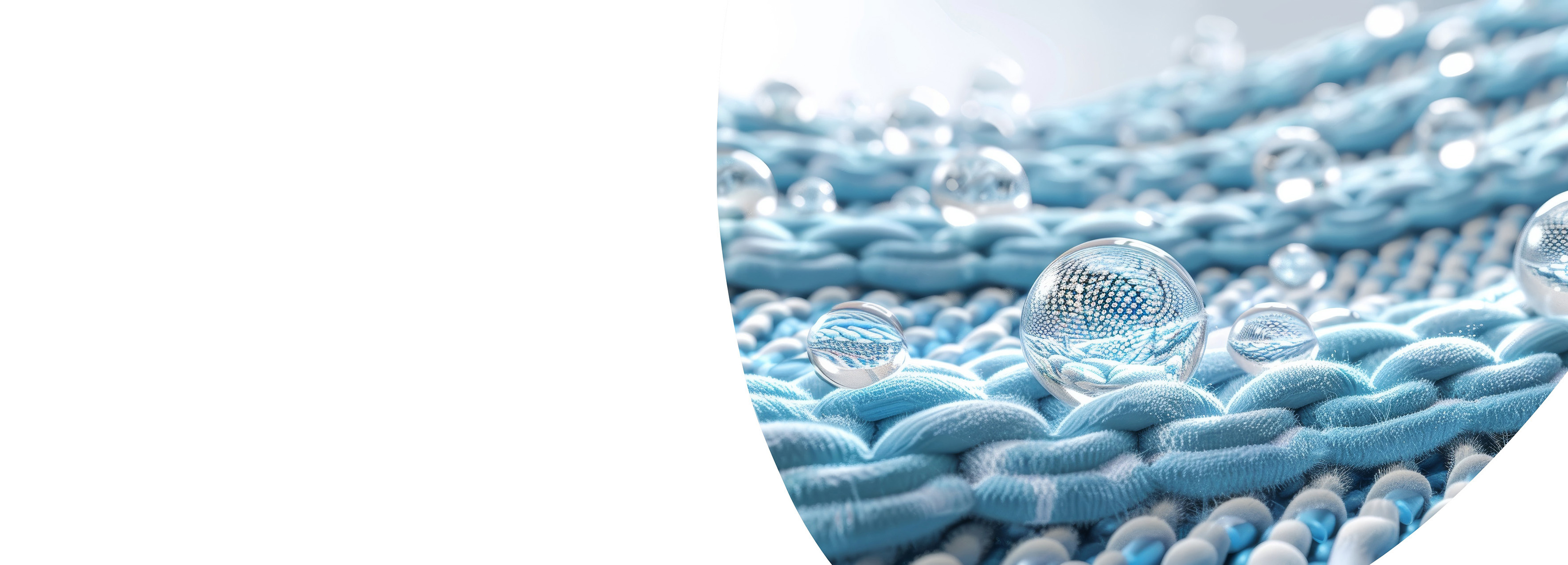
Waterdrops on fabric

Waxes are solid materials and cannot be used directly in many applications. Our innovation is a waterborne emulsion of modified paraffin wax. The product is easy-to-handle and can be readily incorporated into all types of systems without any elaborate equipment. It is designed specifically to provide water repellency to textiles without the use of harmful synthetic fluorinated compounds (PFAS), silicones, or other synthetic polymers.

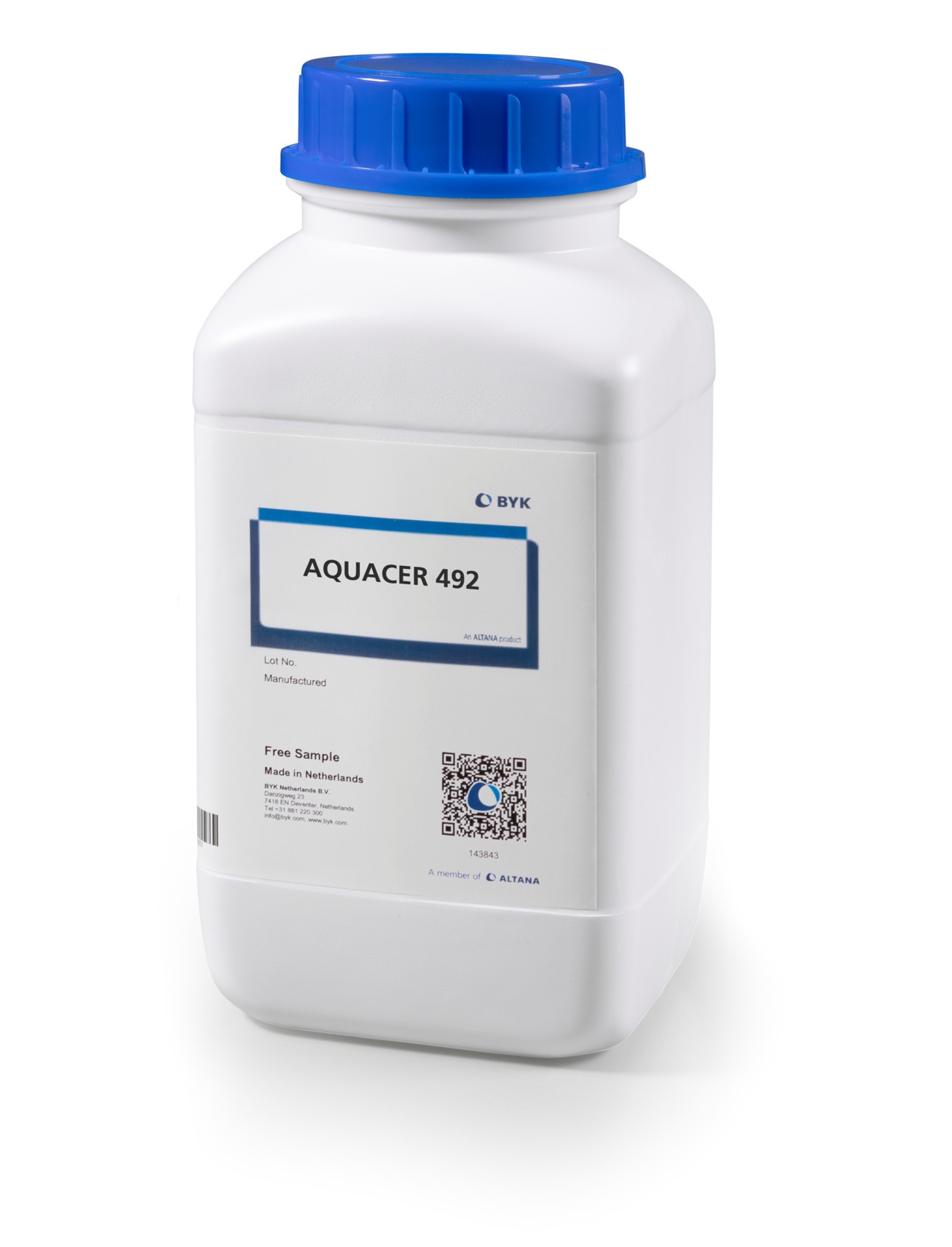
AQUACER 492

Unlike conventional finishing agents, AQUACER 492:

  • Is based on naturally derived raw materials.
  • Uses water as the dispersion medium, avoiding organic solvents.
  • Demonstrates excellent hydrophobicity while retaining vapor permeability.
  • Can be applied easily using standard finishing processes (e.g., dipping, padding, spraying, drying).

The formulation relies on finely dispersed wax particles that can effectively coat textile fibers and form a continuous, breathable barrier that repels water while allowing air and moisture vapor to pass through.

Performance and application potential

In internal testing, textiles treated with our AQUACER 492 demonstrated:

  • Excellent results in rain test and water drop test, demonstrating outstanding hydrophobicity.
  • Maintained air permeability in comparison to untreated samples.
  • No negative change in fabric softness, color, or haptics.

AQUACER 492 is compatible with cellulosic fibers (cotton, viscose), synthetics (e.g. polyester), and blends, making it suitable for a wide range of applications including outdoor and performance clothing, workwear and uniforms, upholstery and home textiles, technical and industrial fabric.

Because of its PFAS-free composition, our product contributes significantly to compliance with upcoming regulatory restrictions on per- and polyfluoroalkyl substances (e.g., EU REACH, US EPA bans).

Sustainability and environmental impact

The development of this wax additive supports several key sustainability goals:

  • Substitution of hazardous substances (PFAS, silicones).
  • Reduction of microplastic.
  • Lower resource consumption due to easy-to-apply techology.

In life cycle assessments, natural waxes demonstrate a significantly lower environmental footprint than fluorinated or silicone-based compounds. Our product’s water-based formulation also reduces VOC emissions and aligns with modern environmental standards in textile finishing.
 

A Step Toward bio-inspired and safe textile finishes – using nature’s way of protection

AQUACER 492 stands as an innovative example of how nature can inspire sustainable, high-performance material solutions. By mimicking natural waxes found on plant surfaces, we have created a functional textile treatment that meets modern performance standards without compromising ecological values.

We believe that this development demonstrates not only technical excellence but also responsible innovation, helping industries transition away from harmful chemistries while maintaining product quality and durability.

以前に検索した内容

Are you sure you want to delete your search history?

If you delete your search history, all your previous searches will be deleted permanently.